
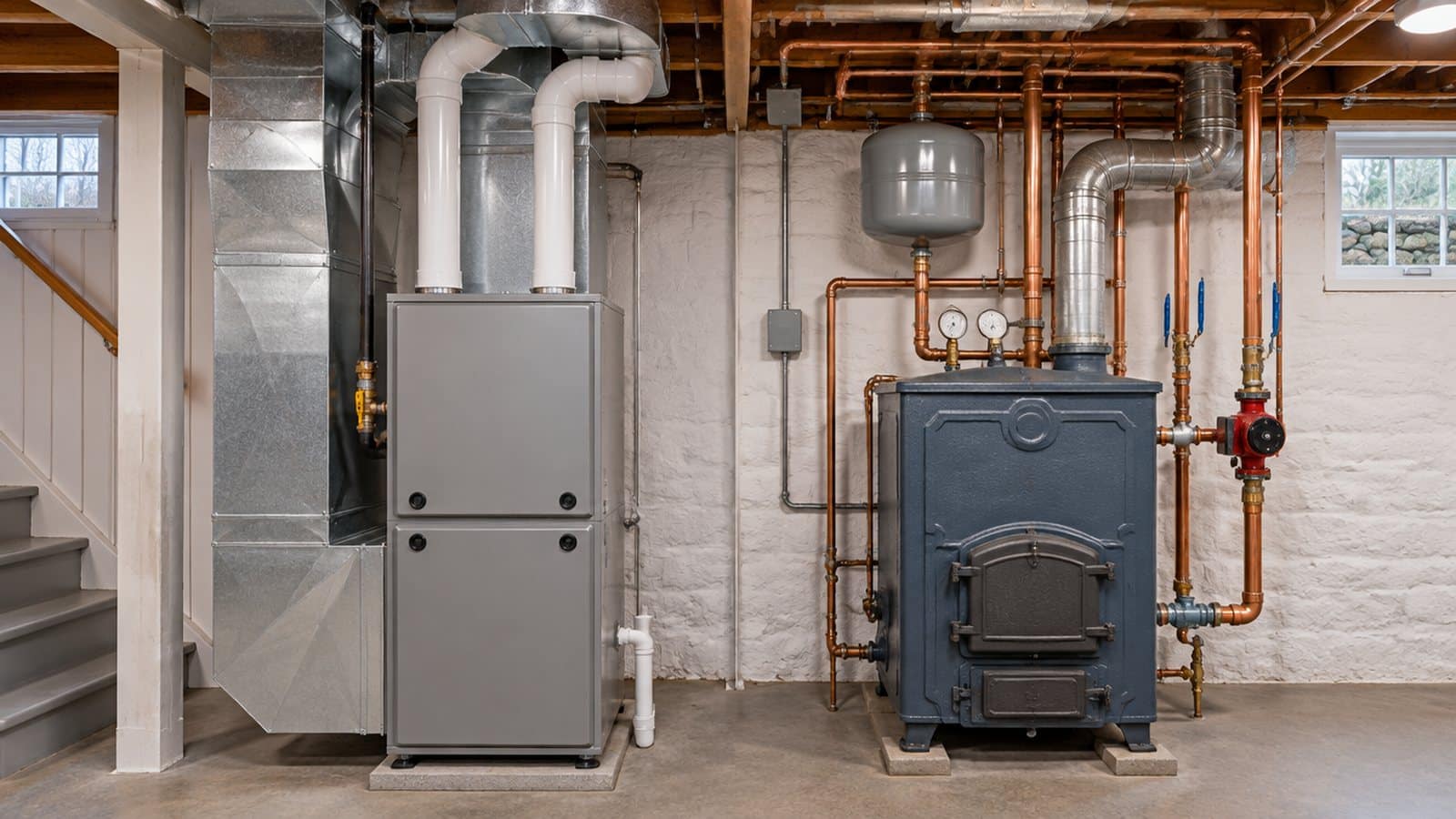
Key Takeaways
- A furnace heats air and blows it through ducts. A boiler heats water or steam that flows to radiators, baseboard or radiant floors.
- Furnace homes can share ductwork with central air. Boiler homes usually add cooling with ductless mini-splits.
- Both can run on natural gas, oil or electricity.
- Typical lifespans: furnaces 15 to 20 years, cast iron boilers 20 to 30 years.
How a Furnace Works
A furnace burns fuel or uses electric elements to heat air. A blower pushes that warm air through ductwork to vents in each room. If your home has floor or ceiling vents and a filter you change, you most likely have a furnace.
How a Boiler Works
A boiler heats water, or in some older homes makes steam, which travels through pipes to radiators, baseboard heaters or radiant floor tubing. Heat radiates into the room without blowing air. If you have cast iron radiators or baseboard units along your walls, you most likely have a boiler. Many older Connecticut homes heat this way.
Comfort and Air Quality
Furnaces heat a home quickly and filter the air as it circulates, and they can add humidifiers or air cleaners. Boilers provide quiet, even, radiant heat without moving dust around the house, but they do not filter or cool the air.
Cooling Considerations
Because a furnace already has ducts, adding or replacing central air is usually straightforward. Boiler homes typically have no ductwork, so ductless mini-splits are a popular way to add cooling, and they provide efficient heat as well.
Hot Water
A furnace has nothing to do with your hot water; you need a separate water heater. A boiler can also make your domestic hot water using an indirect water heater, or a combi boiler can provide both heat and on-demand hot water in one compact unit.
Can You Switch From One to the Other?
It is possible, but it usually is not practical. Switching from a boiler to a furnace means installing ductwork throughout the house, and switching the other way means installing piping and radiators. Most homeowners replace like with like, or add a heat pump to complement their existing system.
Learn more about furnace installation, boiler installation and heat pumps.
When to Call a Professional
If your furnace or boiler is more than 15 years old, needs frequent repairs or is driving up your fuel bills, schedule an evaluation. We will explain your options for repair, replacement or adding a heat pump.
Frequently Asked Questions
Is a boiler the same as a water heater?
No. A water heater heats water for your faucets and showers. A boiler heats water to warm your home through radiators or baseboard. A combi boiler or a boiler with an indirect tank can do both.
Which is more efficient, a furnace or a boiler?
Both are available in high-efficiency models of about 95% AFUE or higher. The best choice usually depends on the distribution system your home already has.
Which lasts longer, a furnace or a boiler?
Furnaces typically last 15 to 20 years. Cast iron boilers often last 20 to 30 years, while high-efficiency condensing boilers typically last 15 to 20 years.