
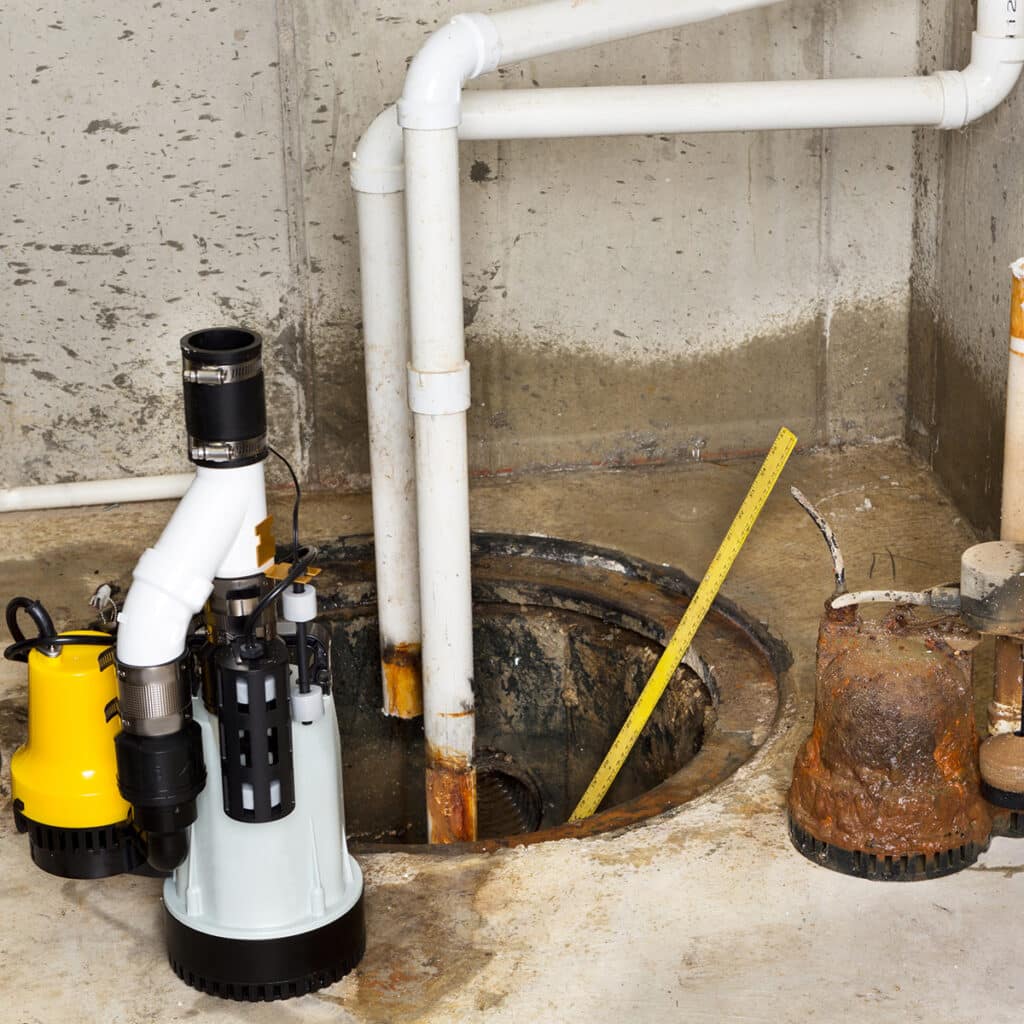
Many sump pump failures happen during heavy rainstorms when the system is needed most. Replacing an aging or undersized sump pump before failure can help prevent major water damage, mold growth, and expensive cleanup costs.
Water entering your basement during storms or pooling near foundation walls often means your sump pump is failing or unable to keep up with demand.
Persistent dampness, humidity, or musty smells can signal that groundwater is not being removed properly from your basement.
Grinding, rattling, or vibrating sounds may indicate worn internal components or a failing motor.
A sump pump that turns on too often or never shuts off may be improperly sized or struggling with drainage issues.
Rust, corrosion, or mineral buildup around the pump or basin can reduce efficiency and lead to system failure.
Older sump pumps become less reliable over time and are more likely to fail during heavy rain or power outages.